Introduction
Saint Petersburg is a city of layered stories — monumental facades, narrow canals, and a restless creative scene. For writers, directors, and producers working remotely or locally, that city DNA can become the emotional core of effective video advertising. This article gives a practical playbook: scriptwriting techniques, storytelling frameworks, remote-work tips, online learning routes, and a localised approach to building a personal brand in Saint Petersburg.
1. Trends that matter in video advertising (2026)
— Short-form dominance: 6–30 second hooks for Reels, TikTok and VK short videos.
— Story-first creative: audiences respond to narrative logic even in ads — mini-arcs beat features-packed montages.
— Authenticity + craft: raw, local textures (cityscapes, everyday people) combined with cinematic sound and color grade.
— Cross-platform repurposing: one core story, multiple edits and aspect ratios.
— Data-informed creative: A/B test two hooks and two CTAs; double down on winners.
2. Scriptwriting essentials for effective ads
— Start with a single objective: brand recall, trial, or click. Keep one objective per video.
— Use a compact structure (adapt to 6/15/30/60 seconds):
— 0–3s: *Hook* — emotional or visual jolt.
— 3–10s: *Problem* — relatable friction.
— 10–20s: *Solution + benefit* — show outcome, not features.
— Final 3–7s: *Call to action* — concrete and easy.
— Voice choices: native Russian copy should choose *вы/ты* based on brand persona (formal for B2B, casual for youth products).
— Visual-first writing: every line of copy must suggest an image or sound. Script example (30s):
— 0–3s: Close-up of rain on Nevsky; headline: «Another grey morning?»
— 3–10s: Person struggling with coffee, laptop; subtitle: «Productivity stalled.»
— 10–20s: Quick montage of product in action; user smiling; text: «Get 2x output.»
— 20–27s: Key benefit + social proof (1 short quote).
— 27–30s: CTA: «Try it free — link in bio.»
— Keep dialogue natural; avoid explaining visuals with voiceover.
3. Storytelling techniques that convert
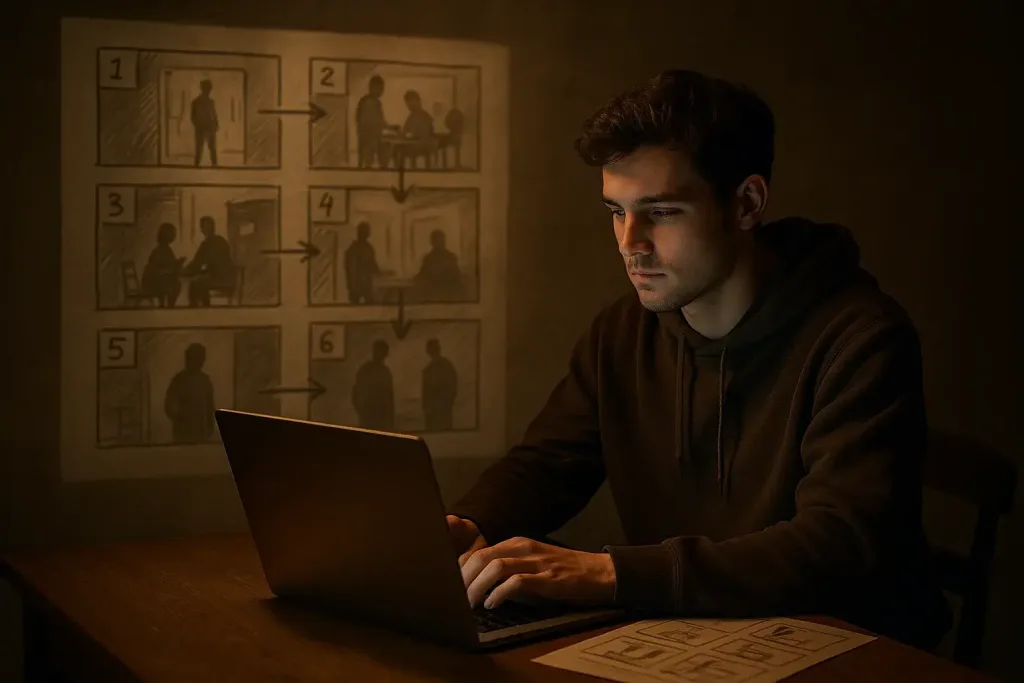
— Micro-arc: use a full emotional arc in 15–30 seconds (setup, turn, payoff).
— Contrast and transformation: show ‘before’ and ‘after’ in one frame change.
— Sensory detail: include specific sounds (tram bells, rain on metal) to localise the ad to St. Petersburg and create memory hooks.
— Characters over features: one relatable protagonist triggers empathy faster than a product list.
— Emotion-first metrics: track engagement and watch-time alongside conversions.
4. Remote creative work — practical workflow
— Home studio basics (budget-friendly):
— Camera: modern smartphone with manual controls.
— Audio: lavalier mic + compact recorder or smartphone interface.
— Light: 1 softbox or LED panel + reflector.
— Stabilization: gimbal or tripod.
— File & project management:
— Use cloud storage (Google Drive, Yandex.Disk) with clear folder naming: Project_Client_Date_Version.
— Deliverables checklist per project: script, storyboards, rough cut, fine cut, final files (MP4 H.264), subtitles.
— Communication:
— Weekly sprint updates, timestamped feedback on edits, clear approval gates.
— Shared assets: moodboard, color palette, licensed music list.
— Contracts and payments:
— Fixed-fee for concept and script; time-and-materials for production; milestone payments.
— Always define usage rights (platforms, territories, duration).
5. Online learning path (fast-track)
— Foundations (2–4 weeks):
— Short courses on script structure and ad formats (Domestika, Skillshare, Coursera).
— Russian platforms for local market insights: Skillbox, Netology.
— Craft and technique (1–3 months):
— Scriptwriting for commercials, directing short-form video, editing for social.
— Project: produce three ads (6s, 15s, 30s) for the same product.
— Advanced (ongoing):
— A/B testing creative, brand storytelling, data-driven creative decisions.
— Mentor review and portfolio coaching (find local mentors via Telegram/VK groups).
— Learning-by-doing:
— Create case studies: problem, creative brief, script, execution, results (metrics).
6. Building a personal brand in Saint Petersburg (practical steps)
— Define your niche: video ads for tech startups, luxury hospitality, local food brands, etc.
— Portfolio essentials:
— 60–90s showreel with 3–5 best projects, plus shorter social edits.
— Written case studies with KPIs and your role.
— Contact and service page (pricing models or starting rates).
— Platforms and content strategy:
— Russian social: VK, Telegram, YouTube, Instagram. Use localized captions and hashtags.
— International visibility: Behance, Vimeo, LinkedIn. English descriptions help attract remote clients.
— Regular micro-content: behind-the-scenes reels, script breakdowns, before/after edits.
— Local networking:
— Attend meetups, screenings, and creative evenings in the city — present case studies, not only business cards.
— Collaborate with local photographers, composers, and actors — cross-promote.
— Reputation and social proof:
— Collect testimonials and short video endorsements from clients.
— Participate in local awards or festivals — even nominations add credibility.
7. Local flavor: how to use Saint Petersburg in your creative work
— Visual motifs: canals, bridges, trams, pastel facades — use them sparingly as emotional shorthand.
— Tone: slightly melancholic or ironic humor often resonates with St. Petersburg audiences; test tones regionally.
— Language: include idiomatic Russian lines or micro