Introduction
Saint-Petersburg’s cinematic canals, classical facades and dynamic creative scene give local storytellers unique visual and emotional assets. Whether you’re pitching to Petersburg startups or selling to a global client base, strong video advertising, tight scriptwriting and a compelling personal brand will get you noticed — even when you work remotely.
This article gives practical tools and a step-by-step playbook to craft memorable video ads, sharpen your scriptwriting, thrive in online learning, and turn remote creative work into a sustainable freelance or agency career based out of Saint-Petersburg.
Why video advertising matters (and why your Saint-Petersburg edge counts)
— Video dominates social feeds: higher attention and conversion than static posts.
— Local flavor sells: subtle cultural cues (architecture, mood, seasons like White Nights) create authenticity for regional audiences and distinctive content for global clients.
— Video is portable: a strong showreel helps you win projects remotely and locally.
Scriptwriting fundamentals for high-converting video ads
Focus on clarity, speed, and emotion. For most ads (6–60 seconds), use this compact structure:
— Hook (0–3s): a surprising visual or line that stops the scroll.
— Problem (3–10s): show the pain or desire quickly.
— Solution (10–25s): present the product/offer as the obvious fix.
— Proof (optional 25–45s): quick social proof or demo.
— CTA (final 2–5s): specific, simple action (link, promo code, call).
Key copywriting tips:
— Lead with the benefit, not the feature.
— Use active verbs and short sentences.
— Build micro-moments: each shot should answer “why should I care?”
— Script for sound off: many users watch without audio — rely on visuals and captions.
— End with a visual hook that reinforces the CTA.
Storytelling techniques that make ads memorable
— Character: Center the story on a relatable persona. One or two characters is enough in short ads.
— Stakes: Clearly show what’s lost or gained — even small stakes create emotional urgency.
— Visual metaphors: Use cityscapes, weather, textures to symbolize mood (fog for uncertainty, sunrise for new beginnings).
— Contrast and transformation: Show “before” vs “after” in one visual beat.
— Rhythm and pacing: Match pacing to platform — TikTok favors fast cuts; YouTube pre-roll can be a bit slower.
Practical 30-second script (example tailored to Saint-Petersburg vibe)
— Visual: Dawn on a quiet Nevsky-like street, tram bell in the distance.
— On-screen text (hook): “Tired of creative briefs that go nowhere?”
— Scene: A designer at a laptop, mess of notes, late-night coffee.
— Voiceover: “You need clarity, speed, and a client-ready concept.”
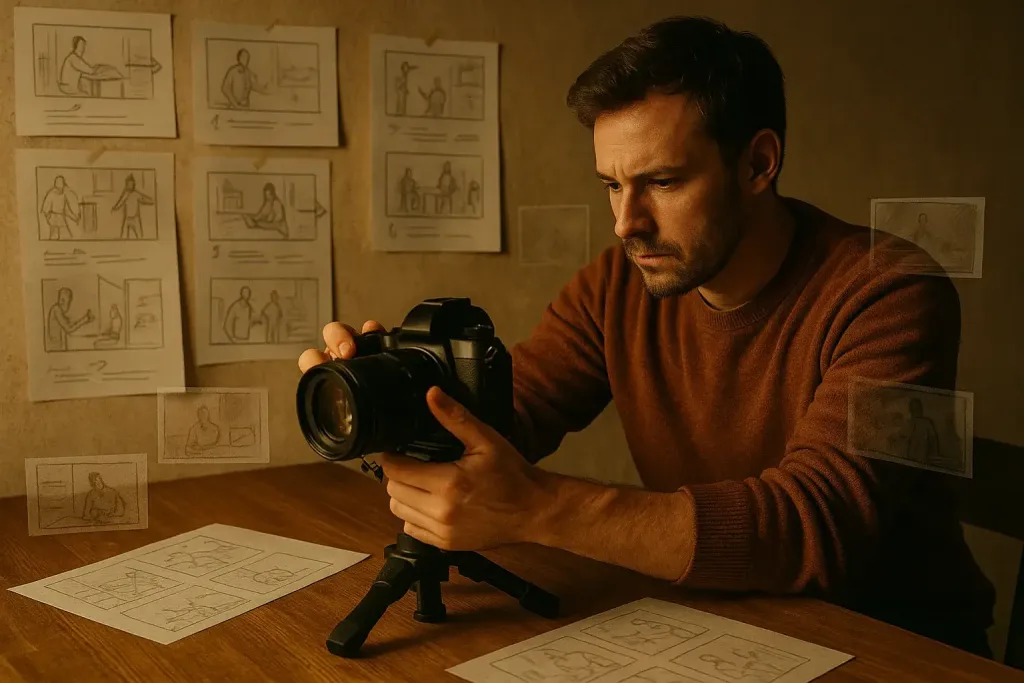
— Cut: Quick 6-sec montage of concept sketches → polished storyboard → short clip.
— On-screen text: “From brief to final ad — in 48 hours.”
— CTA: “Book a free 15-minute creative sprint. Link in bio.”
Tools and workflows for remote creative teams
Essentials for smooth remote production:
— Communication: Slack / Telegram / Microsoft Teams
— Project management: Notion / Trello / Asana
— Collaborative design: Figma / Canva
— Video review & approval: Frame.io / Vimeo Review
— Files & delivery: Google Drive / Dropbox
— Remote presentation: Zoom / Google Meet + clean screen recordings
Workflow tip: keep your process transparent — a one-page creative brief + 3 check-in milestones reduces revisions and speeds delivery.
Online learning: how to level up fast (local and global options)
— Short courses and micro-credentials: focus on platforms that offer practical projects and portfolio pieces.
— Global: Coursera, Domestika, Udemy (search for courses on video storytelling and copywriting).
— Russia-oriented: Skillbox and other Russian e-learning platforms often provide localized marketing and legal nuances.
— Learn by doing: build a spec ad or volunteer for local causes to create portfolio pieces with recognizable visuals.
— Peer feedback: join local online communities, critique circles, and Telegram channels to get fast, actionable feedback.
Finding work and building a client pipeline (remote + Saint-Petersburg)
— Local channels: reach out to Saint-Petersburg creative agencies, cultural venues and tech startups; attend hybrid meetups or industry lectures.
— Freelance marketplaces: Upwork, Fiverr, FL.ru, Kwork. Optimize profiles with targeted keywords (video ads, scriptwriter, social video).
— Social proof: publish short case studies—explain the brief, idea, results (metrics when possible).
— Partnerships: team up with local videographers, motion designers and sound engineers to offer turnkey packages.
Personal brand: positioning, platforms and content plan
— Niche down: choose a clear niche (e.g., “scriptwriter for local lifestyle brands” or “video ads for SaaS targeting EU market”).
— Visual identity: consistent thumbnails, logo, tone of voice and a short tagline.
— Platforms:
— Professional: LinkedIn (B2B), Behance (visual portfolio), Vimeo (showreel).
— Local/social: VK and Telegram channels can be effective in Russia for community engagement.
— Social ads: post sample ads and micro-cases on Instagram and TikTok to demonstrate format fluency.
— Content mix:
— Portfolio pieces and before/after case studies.
— Short how-to clips (script tips, shot lists).
— Behind-the-scenes of a remote project (builds trust).
— Frequency: start with 1 quality post per week + stories/updates to keep momentum.
Pricing, contracts and professional norms
— Package your services (script + storyboard + basic edit) instead of hourly rates for clarity.
— Use a simple written agreement: scope, deliverables, deadlines, revisions, payment terms.
— Consider local tax and business rules — consult a specialist about freelancing in Russia (self-employed options exist).
30/60/90-day action plan
— Days 1–30: Build a one-page offer + create a 60–90 second showreel from spec or past work. Set up profiles on two platforms (LinkedIn + Behance/Vimeo).
— Days 31–